Visit five business websites tonight and you'll notice something. The ones that feel modern aren't just prettier — they're more confident. The headline takes a clear stand. The motion guides your eye instead of distracting it. The whole experience feels like it was made by a team that knows exactly who they're talking to.
That's the shift happening in web design right now. It isn't really about trends, it's about intent. A site built around a clear customer and a clear promise will outperform a beautifully designed brochure every single time.
Here are the design directions actually shaping high-performing business sites in 2026 — and the decisions behind them you can apply whether you're redesigning next quarter or just trying to improve what you've got.
1. Bold, Editorial Typography
Generic sans-serif headlines are out. The best business sites in 2026 lean into large, opinionated display typography — often pairing a strong display face with a clean body font.
Typography is now the primary brand expression on the homepage, more than logo or imagery.
2. Motion-Led Storytelling
Scroll-triggered animations, subtle parallax, gradient meshes and micro-interactions are everywhere — but the winners use motion to guide attention, not to show off.
The rule: every animation must serve a hierarchy or conversion goal. If it's just decoration, kill it.
3. Glassmorphism, Gradients and AI-Tech Aesthetics
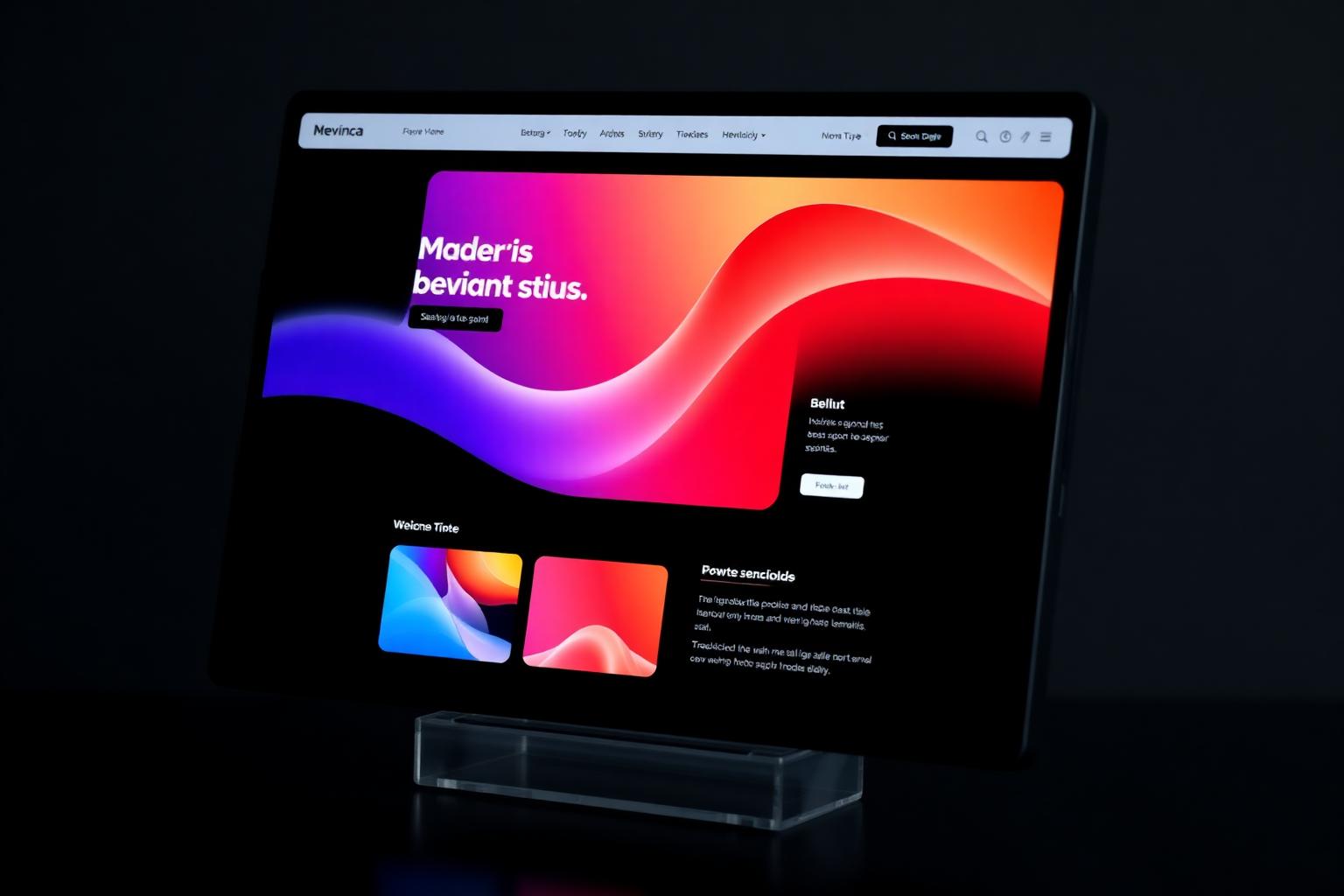
Premium SaaS and AI brands are dominating with dark themes, soft glassmorphism cards, blue/cyan gradient glows and high-contrast imagery. This aesthetic now signals "modern, trustworthy, well-funded" to most B2B buyers.
4. AI-Personalised Content Blocks
Top websites now serve different hero copy, case studies and CTAs based on visitor source, industry or behavioural signal. Even simple personalisation ("You came from LinkedIn — here's our B2B story") lifts conversions 20–40%.
Get a free strategy session
Want results like this for your business?
Book a free 30-min audit with our growth team — we'll show you the exact next steps for your funnel.
5. Mobile-First Becomes Mobile-Only Thinking
Over 70% of business website traffic in India is mobile. Designs that look stunning on a 16-inch MacBook but cramped on a phone are a conversion disaster. The winners design mobile first and treat desktop as the secondary view.
6. Conversion-Engineered Layouts
The strongest business sites follow a tight conversion blueprint: bold promise, proof, problem-agitation, offer, social proof, FAQ, final CTA. Pretty doesn't matter if the structure doesn't sell.
7. Performance As Design
A beautiful site that loads in 6 seconds will lose to an average site that loads in 1.5. Image optimisation, lazy loading, edge hosting and Core Web Vitals are now design decisions, not engineering afterthoughts.
Key Takeaways
- Bold display typography is the new primary brand expression.
- Use motion to guide attention, never as decoration.
- Dark themes, glassmorphism and gradient glows signal premium SaaS authority.
- AI-personalised hero blocks lift conversions 20–40%.
- Design mobile-first and treat performance as a design decision.
Frequently Asked Questions
How long should a modern business website take to build?+
A premium conversion-engineered website typically takes 4–8 weeks for a focused single-product business and 8–14 weeks for multi-service or ecommerce brands.
Should I use a template or a custom website?+
Templates work for very early-stage businesses. Any brand serious about conversion and positioning should invest in a custom-designed website built around their actual buyer journey.
What CMS should a business website use in 2026?+
Most premium business sites use headless setups with Next.js or TanStack Start. Webflow remains strong for marketing sites. WordPress is fine if performance is taken seriously.
Author
Nexmedia Tech Editorial
The Nexmedia Tech editorial team builds AI-powered marketing systems for ambitious brands across India and beyond. From SEO and paid acquisition to CRM and conversion optimisation — we ship growth engines, not just campaigns.