Here's a question worth sitting with: how much more would your business make if every hundred visitors converted at three instead of two? For most of the brands we work with, that one percentage point is worth more than the next quarter of ad spend.
That's the quiet power of CRO. You don't need more traffic — you need more of the traffic you already have to take action. And getting there isn't about clever tricks. It's about removing the small frictions that quietly cost you customers all day, every day.
What follows is the practical framework we run with clients — equal parts data, user research, and disciplined testing.
1. Audit Before You Optimise
Start with a structured audit covering analytics, heatmaps, session recordings, funnel drop-off, form analytics, page speed and mobile experience. Most websites have 4–8 obvious conversion leaks worth fixing before any testing begins.
2. Quantitative Research
Use GA4, Hotjar and Microsoft Clarity to identify where users drop off, what they click, what they ignore and where rage-clicks happen. Data tells you what is happening but not why.
3. Qualitative Research
Pair analytics with on-site surveys, user interviews and exit-intent feedback. Ask: what almost stopped you from buying today? The answers are where the real CRO wins live.
4. Prioritise With ICE Or PIE
Score test ideas by Impact, Confidence and Ease (or Potential, Importance and Ease). Run the high-impact, high-confidence, easy-to-ship tests first. Don't waste cycles on speculative low-impact tests.
Get a free strategy session
Want results like this for your business?
Book a free 30-min audit with our growth team — we'll show you the exact next steps for your funnel.
5. Test Bold Changes, Not Tiny Ones
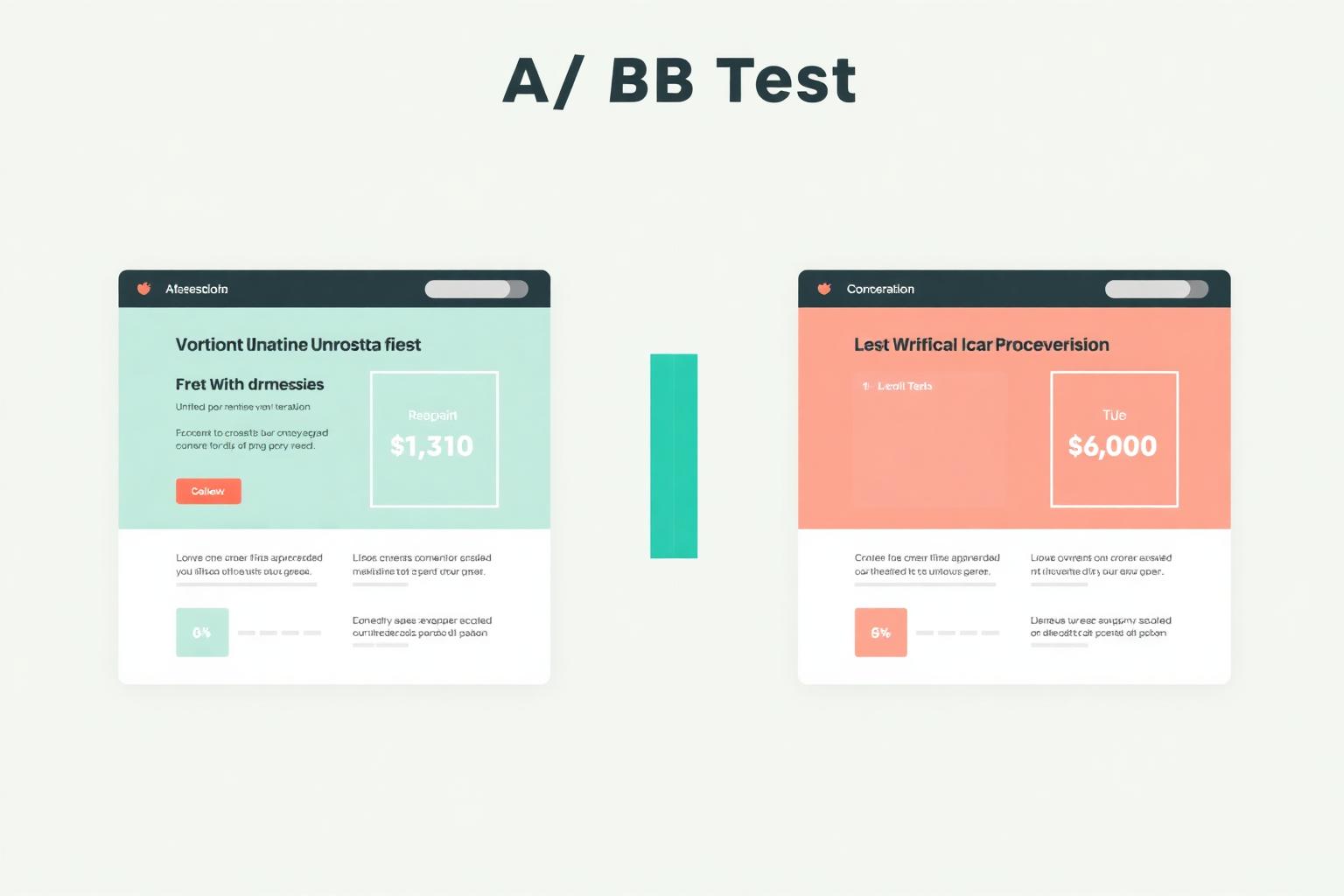
Most A/B tests don't fail — they're too small to win. Test entirely different headlines, offers, hero structures and form lengths. Bold tests produce learning. Tiny tests produce noise.
6. Mobile-First CRO
Over 70% of traffic is mobile. Audit and optimise mobile separately from desktop. A site that converts at 4% on desktop and 1.5% on mobile has more potential mobile lift than any desktop change can produce.
7. Compound Wins With A Testing Cadence
Run at least 2–4 structured tests per month. Each 5–10% lift compounds. Twelve months of disciplined testing typically lifts overall conversion rates 50–150%.
Key Takeaways
- Audit before testing — fix obvious leaks first.
- Combine quantitative analytics with qualitative user research.
- Prioritise tests with ICE or PIE scoring frameworks.
- Run bold tests on bold variables, not button colours.
- Compound 5–10% wins monthly into 50–150% annual lifts.
Frequently Asked Questions
How long does a CRO test need to run?+
Until it reaches statistical significance with at least 1,000 conversions per variant or two full business cycles, whichever is longer.
Can I run CRO on low-traffic sites?+
Low-traffic sites should focus on audit-driven UX improvements and qualitative research instead of formal A/B testing.
What tools do I need for CRO?+
GA4, Hotjar or Microsoft Clarity, and an experimentation tool like VWO, Convert or Optimizely. Most setups can start with Clarity (free) plus GA4.
Author
Nexmedia Tech Editorial
The Nexmedia Tech editorial team builds AI-powered marketing systems for ambitious brands across India and beyond. From SEO and paid acquisition to CRM and conversion optimisation — we ship growth engines, not just campaigns.